Northern Romanovtsa: Difference between revisions
ANormalTree (talk | contribs) m (Small edit to Romanovtsa Concept.png text) |
m (→Appearance) |
||
| (5 intermediate revisions by the same user not shown) | |||
| Line 1: | Line 1: | ||
{{ | {{For|other Romanovtsa|Romanovtsa (disambiguation)}} | ||
|img=Romanovtsa.png | The '''{{PAGENAME}}''' is a {{Icon|Fauna}} item. | ||
| | {{Item | ||
|gets= | |img=Northern Romanovtsa.png | ||
| | |capt1=The {{PAGENAME}} | ||
|flavor_text=Magically designed to produce vegetation, the Romanovtsa is one of the few magic touched creatures to be successfully mass-cultivated by catfolk. | |||
|type=Fauna | |||
|gets={{i|Husbandry}}, {{i|Pouches}} | |||
|sell=1,555 | |||
|nature={{n|Hardy}} | |||
|taxonomy=Mammalian | |||
|rarity=2 | |||
|debut= | |debut= | ||
}} | }} | ||
The ''' | ==Appearance== | ||
The '''{{PAGENAME}}''' is a white wooled {{wp|sheep}} with black skin, orange hooves with leaf growths, and three carrot horns on its head. Two of these horns sit on either side of the Romanovtsas head, while the third sits at the center of its forehead. | |||
== | ==Obtainment== | ||
* Obtained from the [[Husbandry]] event 'Wild Romanovtsa'. | |||
* Randomly obtained when opening [[Pouches]]. | |||
==Usage== | |||
* [[Fauna]]: Add to a cat to study it everyday and earn rewards each time you study. | |||
==Faunapedia Entries== | |||
{{Main|Faunapedia}} | |||
===General Observation=== | |||
Magically designed to produce vegetation, the Romanovtsa is one of the few magic touched creatures to be successfully mass-cultivated by catfolk. | |||
===Entry I=== | |||
The first recorded domestication of the Romanovtsa happened during the Third Era's "Year of Winter," when the fields of what later became [[Northern Harvest]] went grey and barren. It was an agonizing cold spell. [[Catfolk]] were growing hungry and desperate. | |||
Wynne Thistlepaw, a tortoiseshell farmer with the stubbornness of a mule, spotted wild Romanovtsa munching grass along Bayberry Ridge. Thanks to the ridge's unique [[harkestone]] sediments, their fluffy coats had sprouted tiny clovers. | |||
The story goes: For three moons, Thistlepaw lured a young Romanovtsa down with sugared bayberries. Her neighbors thought she'd lost her wits. Magic-touched beasts had maimed plenty of catfolk before. But when harvest came, Thistlepaw's once-dead fields exploded with life. "Dumpling," as she named the beast, had shed enough valuable crop to fill her storehouse. | |||
The news traveled faster than a fox in a fit. Come the following spring, half the nearby villages were raising their own Romanovtsa. A breeding initiative was immediately taken up by the catfolk of [[Harvest]], with pairs carefully selected for temperament, vegetation variety, and fertile potency. | |||
Carrots were favored in the region for their taste and versatility, and became the iconic image of the Northern Romanovtsa, though hundreds of varieties of Romanovtsa populate Kotemara today. | |||
===Entry II=== | |||
Despite its considerable size and bulk, rivaling most domestic catfolk in height, the Romanovtsa is remarkably docile. The Northern variety is especially so, after hundreds of years of rigorous, selective breeding. Though Romanovtsa that are not socialized can be territorial. | |||
Often described by shepherds as “aggressively affectionate,” Romanovtsa are well-suited to agrarian life with catfolk. They enjoy frequent socializing, and are known to headbutt their keepers when happy. They walk in herds, using a series of stamps and taps to communicate aggression or distaste, rather than brandishing their horns. With such soft vegetables atop their head, the animals have adapted new mannerisms. | |||
They require a minimum of two acres of open soil to graze upon, and must be rotated between fields every three harvests to prevent magical fatigue. Farmers trim their horns once a moon, depending on variety. A well-tended Romanovtsa can remain productive for upwards of forty seasons, making them a highly valuable asset to agrarian villages. | |||
===Entry III=== | |||
Romanovtsa are, put bluntly, slow animals. Their default gait is a plodding, unhurried walk that tends to frustrate those less patient. They do not run unless threatened, and even then, a sprint is at best a lumbering trot. Many cultural depictions of Romanovtsa refer to them unfavorably as “root brains.” Sprouting from this, the term “root brain,” is a general insult that is especially common in Northern [[Harvest]]. | |||
They are, however, strong. A mature Romanovtsa can carry three times its own considerable weight without visible strain, and its broad, flat back makes it a natural platform for riders and cargo alike. Catfolk have been utilizing Romanovtsa as serviceable mounts for centuries, particularly in rural stretches of [[Kotemara]]. A saddled Romanovtsa will plod forward at a steady, unhurried pace, regardless of terrain, weather, or the desperate kicking of its rider. | |||
A Romanovtsa will tirelessly continue walking until forced to stop, or until it finds something worth eating, whichever comes first. | |||
==Gallery== | |||
<gallery> | <gallery> | ||
Romanovtsa Concept.png |Romanovtsa concept sketch as shown on the Sapphurie illustration stream.<ref>[https://youtu.be/ftZbaPzcRnw?t=10798 "Come Watch Us Illustrate the Sapphurie!" by @pawborough (2:59:58)]</ref> | |||
Northern Romanovtsa.png|The {{PAGENAME}} | |||
Romanovtsa Concept.png | Romanovtsa concept sketch as shown on the Sapphurie illustration stream. | |||
</gallery> | </gallery> | ||
==History== | |||
* The '''{{PAGENAME}}''' released on TBA. | |||
==See Also== | |||
{{FaunaSet|id=romanovtsa}} | |||
{{FaunaSet|id=northern}} | |||
==References== | |||
{{refs}} | |||
Latest revision as of 17:29, 24 August 2026
- For other Romanovtsa, see Romanovtsa (disambiguation).
The Northern Romanovtsa is a  Fauna item.
| Northern Romanovtsa | |||
|---|---|---|---|

| |||
| The Northern Romanovtsa | |||
| Magically designed to produce vegetation, the Romanovtsa is one of the few magic touched creatures to be successfully mass-cultivated by catfolk. | |||
| Type | Fauna
| ||
| Obtainment |  Husbandry, Husbandry,  Pouches Pouches
| ||
| Cost | N/A | ||
| Sell Price | 1,555 
| ||
| Nature |  Hardy Hardy
| ||
| Taxonomy Class | Mammalian | ||
| Rarity | 
| ||
| Debut Date | Missing Date | ||
Appearance
The Northern Romanovtsa is a white wooled sheep with black skin, orange hooves with leaf growths, and three carrot horns on its head. Two of these horns sit on either side of the Romanovtsas head, while the third sits at the center of its forehead.
Obtainment
Usage
- Fauna: Add to a cat to study it everyday and earn rewards each time you study.
Faunapedia Entries
- Main Article: Faunapedia
General Observation
Magically designed to produce vegetation, the Romanovtsa is one of the few magic touched creatures to be successfully mass-cultivated by catfolk.
Entry I
The first recorded domestication of the Romanovtsa happened during the Third Era's "Year of Winter," when the fields of what later became Northern Harvest went grey and barren. It was an agonizing cold spell. Catfolk were growing hungry and desperate.
Wynne Thistlepaw, a tortoiseshell farmer with the stubbornness of a mule, spotted wild Romanovtsa munching grass along Bayberry Ridge. Thanks to the ridge's unique harkestone sediments, their fluffy coats had sprouted tiny clovers.
The story goes: For three moons, Thistlepaw lured a young Romanovtsa down with sugared bayberries. Her neighbors thought she'd lost her wits. Magic-touched beasts had maimed plenty of catfolk before. But when harvest came, Thistlepaw's once-dead fields exploded with life. "Dumpling," as she named the beast, had shed enough valuable crop to fill her storehouse.
The news traveled faster than a fox in a fit. Come the following spring, half the nearby villages were raising their own Romanovtsa. A breeding initiative was immediately taken up by the catfolk of Harvest, with pairs carefully selected for temperament, vegetation variety, and fertile potency.
Carrots were favored in the region for their taste and versatility, and became the iconic image of the Northern Romanovtsa, though hundreds of varieties of Romanovtsa populate Kotemara today.
Entry II
Despite its considerable size and bulk, rivaling most domestic catfolk in height, the Romanovtsa is remarkably docile. The Northern variety is especially so, after hundreds of years of rigorous, selective breeding. Though Romanovtsa that are not socialized can be territorial.
Often described by shepherds as “aggressively affectionate,” Romanovtsa are well-suited to agrarian life with catfolk. They enjoy frequent socializing, and are known to headbutt their keepers when happy. They walk in herds, using a series of stamps and taps to communicate aggression or distaste, rather than brandishing their horns. With such soft vegetables atop their head, the animals have adapted new mannerisms.
They require a minimum of two acres of open soil to graze upon, and must be rotated between fields every three harvests to prevent magical fatigue. Farmers trim their horns once a moon, depending on variety. A well-tended Romanovtsa can remain productive for upwards of forty seasons, making them a highly valuable asset to agrarian villages.
Entry III
Romanovtsa are, put bluntly, slow animals. Their default gait is a plodding, unhurried walk that tends to frustrate those less patient. They do not run unless threatened, and even then, a sprint is at best a lumbering trot. Many cultural depictions of Romanovtsa refer to them unfavorably as “root brains.” Sprouting from this, the term “root brain,” is a general insult that is especially common in Northern Harvest.
They are, however, strong. A mature Romanovtsa can carry three times its own considerable weight without visible strain, and its broad, flat back makes it a natural platform for riders and cargo alike. Catfolk have been utilizing Romanovtsa as serviceable mounts for centuries, particularly in rural stretches of Kotemara. A saddled Romanovtsa will plod forward at a steady, unhurried pace, regardless of terrain, weather, or the desperate kicking of its rider.
A Romanovtsa will tirelessly continue walking until forced to stop, or until it finds something worth eating, whichever comes first.
Gallery
-
![Romanovtsa concept sketch as shown on the Sapphurie illustration stream.[1]](/images/thumb/0/02/Romanovtsa_Concept.png/108px-Romanovtsa_Concept.png)
Romanovtsa concept sketch as shown on the Sapphurie illustration stream.[1]
-
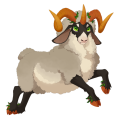
The Northern Romanovtsa
![Romanovtsa concept sketch as shown on the Sapphurie illustration stream.[1]](/wiki/File:Romanovtsa_Concept.png)
History
- The Northern Romanovtsa released on TBA.