Eastern Lupiné
- Add missing debut date.
| Eastern Lupiné | |||
|---|---|---|---|

| |||
| The Eastern Lupiné | |||
| Its unique coat of colors helps it blend seamlessly with both forest canopies and wildflower meadows. | |||
| Type |  Fauna Fauna
| ||
| Obtainment Method | Foraging | ||
| Cost | N/A | ||
| Sell Price | 1,985 
| ||
| Nature |  Nervous, Nervous,  Assertive Assertive
| ||
| Taxonomy Class | Mammalian | ||
| Rarity | 
| ||
| Debut Date | Missing Date | ||
The Eastern Lupiné is a Fauna item.
Appearance
The Eastern Lupiné resembles a canid coated in floral material. A leafy cowl covers the neck, shoulders, and partially the back of the creature. A spikey crest connects from the ears to the lower cheek, two long ribbons that end in a diamond shape are present at the bottom of the crest. The tail is comprised of overlapping rounded scales, the pattern resembles that of succulent leaves. The Eastern Lupiné is primarily colored in varying shades of greens. Bright warm purples, yellows, and specks of blue accent the coat of the creature.
Obtainment
- Territory Grounds: Obtained from Foraging if a cat has TBA level proficiency.
Usage
- Fauna: Add to a cat to study it everyday and earn rewards each time you study.
Faunapedia Entries
- Main Article: Faunapedia
General Observation
Its unique coat of colors helps it blend seamlessly with both forest canopies and wildflower meadows.
Entry I
The Eastern Lupine comes from Zenith valleys. Its appearance portrays that of a living flower—quite literally a dog constructed of grass and flowers, but its inner anatomy is otherwise canid, with most plant tissues wrapping along the muscle and replacing dermal layers, rather than completely overtaking the inner musculature.
The Eastern Lupine does not hunt nor consume meat. Rather, it thrives solely on direct sunlight and, in poor conditions, foraged plants. It is the only known mammal ever to be observed as capable of photosynthesis.
Early Zenith citizens introduced the species to several valley settlements for companionship and waste reduction, as it munched on encroaching plant debris during days with less sunlight. This kept cities clean. Its floral biology eliminates the risk of contracting and spreading zoonotic diseases, making it an excellent societal companion.
It produces very fragrant oils, which have been historically harvested for perfumes and dyes. There are multiple domestication and selective breeding efforts for Lupine of specific color and scent.
History
- TBA.
Gallery
-
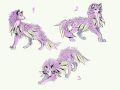
Concept art for the Lupiné